Organizations today manage thousands of users, devices, applications, and digital identities across cloud, hybrid, and on-premises environments. As cyber threats continue to evolve, simply protecting networks is no longer enough. Businesses must also ensure that only the right people have access to the right resources at the right time.
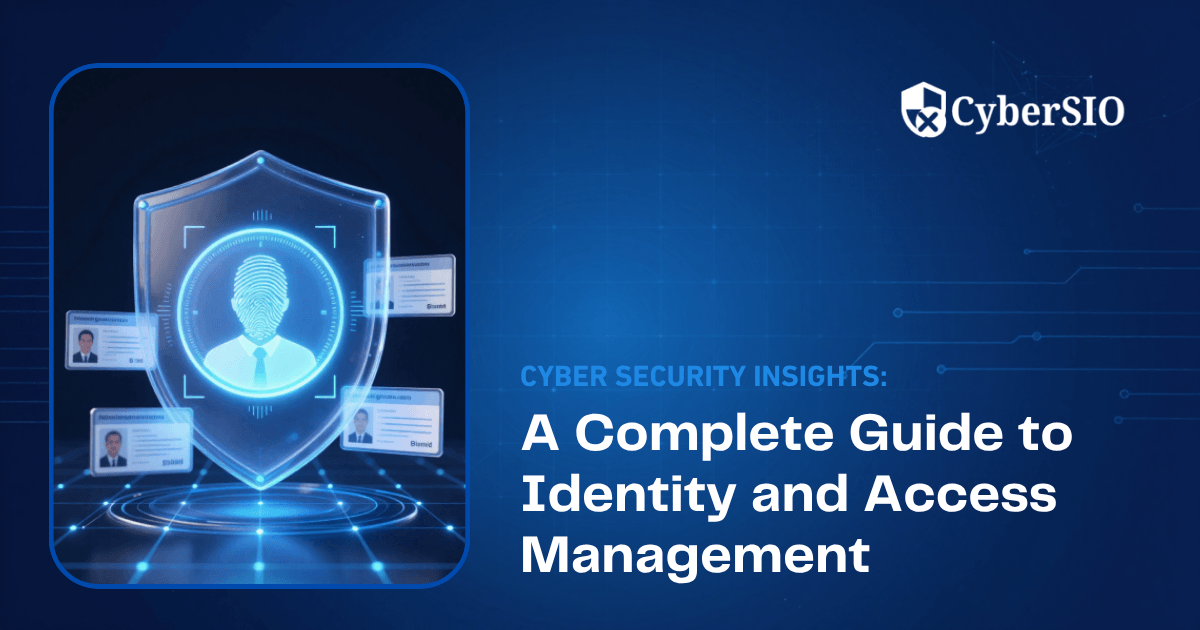
This is where IAM (Identity and Access Management) becomes essential. An effective identity and access management strategy helps organizations secure user identities, control permissions, reduce security risks, and simplify access across business applications. In this guide, you’ll learn what IAM is, how it works, its key components, benefits, and what to look for when selecting an identity and access management system.
See how CyberSIO helps strengthen your security posture: Schedule a Free Demo.
What is IAM?
IAM (Identity and Access Management) is a cybersecurity framework that manages digital identities and controls user access to systems, applications, networks, and sensitive data.
An identity management system verifies who a user is before granting access to business resources. Rather than relying on multiple usernames and passwords, modern IAM solutions centralize identity verification, authentication, authorization, and policy enforcement.
An effective IAM platform ensures users only receive the permissions required for their responsibilities, reducing the risk of unauthorized access while improving operational efficiency.
Why is IAM Important in Modern Cybersecurity?
Cybercriminals increasingly target stolen credentials because they provide direct access to business systems. Organizations also face challenges from remote work, cloud adoption, third-party vendors, and growing compliance requirements.
Implementing IAM security helps organizations address these challenges by providing centralized visibility and control over every digital identity.
Some key reasons businesses invest in identity access management solutions include:
- Protect sensitive business information
- Prevent unauthorized access
- Reduce insider threats
- Support Zero Trust security
- Simplify user onboarding and offboarding
- Improve regulatory compliance
- Secure cloud applications and hybrid environments
Whether deployed on-premises or as Cloud IAM, identity management has become a critical component of enterprise cybersecurity.
Also read: AI in Cybersecurity: 12 Emerging Trends Reshaping Security in 2026
Core Components of an Identity and Access Management System
An effective identity and access management system consists of several essential components working together.
| Component | Purpose |
| Identity Management | Creates, updates, and manages digital identities throughout the user lifecycle. |
| Authentication | Verifies user identity using passwords, MFA, biometrics, or passwordless authentication. |
| Authorization | Determines what resources users can access based on defined policies. |
| Identity Governance and Administration | Monitors user permissions, access reviews, audits, and compliance activities. |
1. Identity Management
Identity management involves creating digital identities for employees, contractors, vendors, and customers. It manages the complete identity lifecycle, from onboarding to role changes and eventual deactivation.
A centralized identity management software ensures user information remains consistent across all enterprise applications.
2. Authentication
Authentication confirms that users are who they claim to be. Modern IAM identity access management platforms support several authentication methods, including:
- Multi-Factor Authentication (MFA)
- Passwordless login
- Biometrics
- One-Time Passwords (OTP)
- Single Sign-On (SSO)
These methods significantly improve security while making access more convenient.
3. Authorization
Once authenticated, users receive permissions based on predefined policies.
Organizations commonly use:
- Role-Based Access Control (RBAC)
- Attribute-Based Access Control (ABAC)
These approaches ensure users only access resources required for their job responsibilities, following the principle of least privilege.
4. Identity Governance and Administration
Identity Governance and Administration (IGA) provides visibility into user permissions, access certifications, audit trails, and compliance reporting.
It helps organizations continuously review access rights and remove unnecessary privileges before they become security risks.
Also read: Patch Management: Benefits, Challenges, and Best Practices for Modern IT Environments
How IAM Works
An IAM identity management platform follows a structured process:
- A user attempts to access an application.
- The platform verifies the user’s identity.
- Authentication is completed using passwords, MFA, or passwordless methods.
- Access policies evaluate the user’s permissions.
- Appropriate access is granted or denied.
- Every activity is logged for auditing and compliance.
This centralized process strengthens IAM cyber security while reducing administrative effort across multiple business applications.
Benefits of IAM for Businesses
Implementing IAM goes beyond strengthening cybersecurity, it also improves productivity, simplifies IT operations, and helps organizations meet compliance requirements. Whether deployed as an on-premises solution or Cloud IAM, Identity and Access Management offers measurable business value.
Some of the key benefits include:
- Enhanced Security: Protects sensitive systems and data by ensuring only authorized users can gain access.
- Improved User Experience: Features like Single Sign-On (SSO) reduce password fatigue and simplify access to multiple applications.
- Regulatory Compliance: Supports industry regulations through audit logs, access reviews, and identity governance.
- Operational Efficiency: Automates user provisioning, deprovisioning, and access management, reducing the workload for IT teams.
- Reduced Insider Risks: Limits unnecessary privileges through Role-Based Access Control (RBAC) and continuous access monitoring.
- Scalability: Easily manages identities across cloud, hybrid, and on-premises environments as organizations grow.
Organizations adopting identity and access management services gain better visibility into user activities while maintaining consistent security policies across their digital ecosystem.
Also read: Disinformation Security and Deepfake Detection
Key Features to Look for in IAM Solutions
Choosing the right identity and access management software is critical for long-term security and scalability. Modern businesses should look for an IAM platform that offers the following capabilities:
1. Single Sign-On (SSO)
SSO enables users to log in once and securely access multiple business applications without repeatedly entering credentials.
2. Multi-Factor Authentication (MFA)
Adding multiple verification methods significantly reduces the risk of compromised passwords and unauthorized access.
3. Passwordless Authentication
Passwordless login using biometrics or security keys enhances both security and user convenience.
4. Role-Based and Attribute-Based Access Control
A strong identity & access management system should support both RBAC and ABAC to provide flexible, policy-driven access management.
5. Identity Governance and Administration
Comprehensive Identity Governance and Administration (IGA) helps organizations review permissions, enforce policies, maintain audit trails, and simplify compliance reporting.
6. Cloud and Hybrid Integration
Modern IAM in cloud computing should seamlessly integrate with cloud platforms, legacy applications, directories, and enterprise systems to provide centralized identity management.
Also read: Understanding Identity Threat Detection and Response (ITDR)
Why tbIAM is the Right Identity and Access Management Solution
As organizations embrace digital transformation, they need an IAM platform that not only strengthens security but also simplifies identity management across diverse environments. tbIAM is designed to meet these evolving requirements by providing centralized identity, authentication, authorization, and governance capabilities.
Key capabilities of tbIAM include:
- Single Sign-On (SSO) for seamless access across multiple applications.
- Multi-Factor Authentication (MFA) with OTP, TOTP, and WebAuthn (FIDO2).
- Passwordless authentication using biometric technologies such as fingerprint and facial recognition.
- Role-Based Access Control (RBAC) and Attribute-Based Access Control (ABAC) for granular permission management.
- Support for SAML 2.0, OpenID Connect (OIDC), LDAP, Active Directory, and Kerberos integration.
- Adaptive authentication based on contextual factors such as device trust, geolocation, and risk scoring.
- Centralized administration with event logging, auditing, token management, and policy enforcement.
- High availability with Kubernetes and Docker-ready deployment for enterprise scalability.
Beyond authentication, tbIAM also simplifies identity lifecycle management by enabling user self-registration, group and role management, secure password management, and automated monitoring of authentication events. Organizations can customize workflows, branding, and authentication experiences while maintaining centralized control over users and applications.
With built-in encryption for personally identifiable information (PII), audit logging, and strong security controls such as brute-force protection and secure token management, tbIAM helps organizations strengthen security, improve operational efficiency, and support regulatory compliance across cloud, hybrid, and on-premises environments.
Final Thoughts
As organizations continue adopting cloud technologies and hybrid work models, managing digital identities has become more important than ever. A robust Identity and Access Management strategy helps protect critical resources, reduce cyber risks, improve user productivity, and simplify compliance.
Whether you’re implementing your first IAM solution or modernizing an existing identity management system, investing in a scalable platform with advanced authentication, governance, and automation capabilities is essential. By adopting the right IAM platform, organizations can build a stronger security foundation while delivering secure and seamless access to users across every environment.
Must Read Articles:
PAM Solution: The Complete Guide to Privileged Access Management
Astra AI : Redefining the Modern SOC with Generative Intelligence
Disinformation Security and Deepfake Detection
Application Performance Monitoring guide
Frequently Asked Questions on IAM
1. What is IAM in cybersecurity?
IAM (Identity and Access Management) is a framework that manages digital identities and controls user access to systems, applications, and sensitive data.
2. Why is Identity and Access Management important?
It helps prevent unauthorized access, strengthens cybersecurity, improves compliance, and simplifies user access management.
3. What are the main components of an IAM system?
The core components include identity management, authentication, authorization, and identity governance and administration.
4. What is the difference between RBAC and ABAC?
RBAC grants permissions based on user roles, while ABAC uses attributes such as department, location, or device to make access decisions.
5. Can IAM work in cloud environments?
Yes. Modern Cloud IAM solutions securely manage identities and access across cloud, hybrid, and on-premises infrastructures.